The Lease That Rejected a Delaware LLC: What Tokyo Landlords Actually Read Before They Say Yes
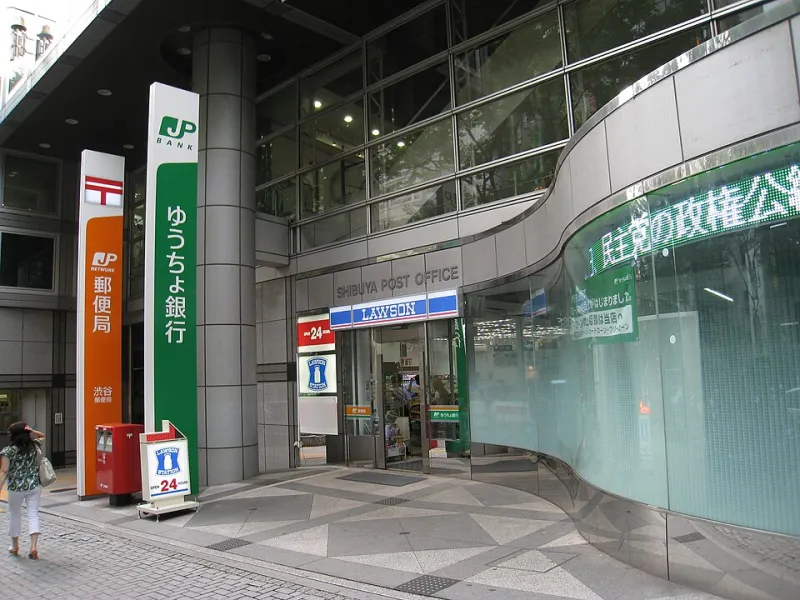
Photo: Waka77, Public domain, via Wikimedia Commons
The email from the leasing agent was polite in the way only Japanese business email can be polite, which is to say it communicated refusal three paragraphs before it communicated anything else. Our client — a SaaS founder from Austin running a Delaware LLC with a healthy bank balance — had made an offer on a small office in Shibuya. The agent's reply thanked him for his interest, explained the building's requirements once more, and closed with a phrase he would come to dread: hōjin tōroku no mono ni kagirimashite — limited to registered corporations.
His LLC, despite being a perfectly valid legal person in the United States, was not a registered corporation in Japan. To the landlord's property management company, it was a foreign name on paper. The deal stopped there.
The Moment American Founders Hit the Wall
This scenario repeats itself weekly across Tokyo, Osaka, and Fukuoka, and it rarely happens at the beginning of a negotiation. It happens in the middle — after the site visit, after the handshake, after the founder has mentally moved in. That timing is not accidental. Japanese counterparties often assume, reasonably, that anyone discussing commercial terms has already sorted out their legal footing. The question about corporate registration surfaces late, usually at the document-collection stage, when the tenant is asked for a tōkibo tōhon — a certified copy of the commercial registry.
A Delaware LLC cannot produce one. Neither can a Wyoming LLC, a Nevada corporation, or any other US entity. What the founder can produce is an apostilled certificate of formation, translated into Japanese, and at that point the conversation changes character entirely. The counterparty is no longer evaluating a tenant; they are evaluating a special case, and special cases in Japanese commercial real estate get declined.
Why the Registry Matters More Than the Money
American founders tend to assume that financial strength is the deciding factor in any commercial negotiation. In Japan, the deciding factor is often verifiability. The commercial registry is a public, standardized, instantly retrievable record of a company's existence, its representative director, its registered address, and its capital. A landlord's screening process, a vendor's credit check, a client's vendor-onboarding questionnaire — all of them are built around that single document.
A foreign entity disrupts the workflow. There is no registry number to pull, no standard form to file, no insurance product that neatly covers the counterparty's risk. The property manager cannot simply check a box. And when a process cannot check a box, the process defaults to no.
This is why the pattern extends well beyond real estate:
- Commercial leases in most Tokyo office buildings require a registered Japanese entity, frequently with a corporate seal (inkan) and often a personal guarantee from the representative director.
- Enterprise clients running procurement onboarding typically ask for a registry extract before issuing a purchase order, no matter how large the contract.
- Payment processors and banks tie accounts to the registered entity, not to a foreign parent.
- Government grants and subsidies for market entry are, with few exceptions, available only to entities registered in Japan.
The kaisha is not a strategic choice in these situations. It is a prerequisite — the entry ticket that everything else assumes you already hold.
The Expensive Pivot
Here is where the costs compound, and they are worth stating plainly. Founders who attempt to operate through a US entity first typically incur:
- Wasted commercial terms. Letters of intent signed under an LLC that cannot close, deposits on hold, and in some cases forfeiture of earnest money when the counterparty will not extend the timeline.
- Interim staffing costs. Without a registered entity, you cannot be the direct employer of your Japanese team members, which pushes you toward employer-of-record arrangements or contractor conversions — both viable, both carrying fees and friction.
- Duplicated professional fees. US counsel reviews the lease; Japanese counsel then explains why the lease cannot be signed by that entity. Two invoices, one dead end.
- A compressed incorporation timeline. Once the pivot happens, the kaisha registration is suddenly urgent, and urgency in Japan means paying for expedited document preparation, rush translations, and — if a founder must travel — last-minute flights.
Compare that with incorporating first. A standard godo kaisha (LLC-equivalent) can be registered in a matter of weeks for a fraction of the cost of a kabushiki kaisha, and it produces the registry extract that unlocks leases, bank accounts, and client onboarding in one stroke. The total outlay for the entity is typically less than a single month of the pivot path's friction costs.
Doing It Right the First Time
The lesson is not that a US entity is worthless in Japan — it can hold intellectual property, sign certain cross-border contracts, and invoice from abroad. The lesson is sequencing. Any founder who will need a physical presence, hire locally, or sell to Japanese enterprises should treat kaisha registration as step one, not a reaction to a rejected lease.
Before you tour offices or open negotiations with a Tokyo client, ask one question: does this counterparty require a tōkibo tōhon? If the answer is yes — and in commercial Japan it usually is — register the kaisha first, then negotiate from a position where your paperwork matches your ambition.
The Shibuya office in our opening story? The founder registered a godo kaisha within six weeks, re-submitted his application with a fresh registry extract, and signed the lease in the following quarter. The office was still available. The six weeks of delay, the expedited fees, and the near-miss with a competitor who was also touring the space — those were not.
Incorporate first. Negotiate second. The registry extract is the document that opens the door; everything else is just the conversation that follows.