One Yen on Paper, Millions in Doubt: What Token Capital Really Signals to Japan's Gatekeepers
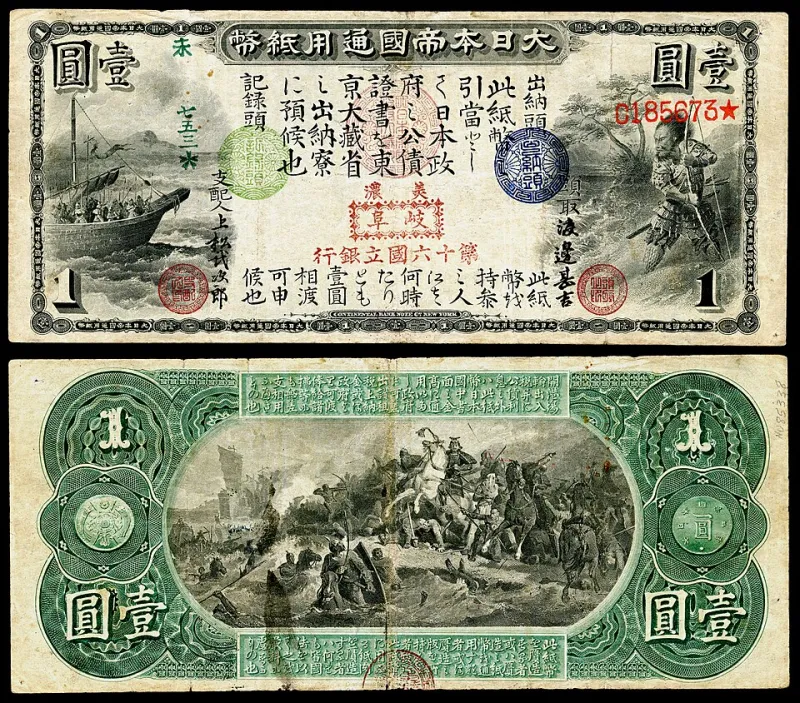
Photo: National Museum of American History, Public domain, via Wikimedia Commons
Here's the fact that surprises nearly every American founder incorporating in Japan: there is no legal minimum capital requirement. You can file your articles of incorporation for a Kabushiki Kaisha or a Godo Kaisha with paid-in capital of one yen. The Commercial Registry will accept it. Your company will exist.
And then, very quickly, the trouble starts.
The Law Says Yes. Everyone Else Says Show Me.
The gap between what Japan permits and what Japan expects is where most token-capital founders get burned. The statute is permissive because Japan abolished its old ¥10 million minimum for KKs back in 2006, aligning incorporation law with a global trend toward low barriers to entry. The United States made a similar move long ago — you can form an LLC in Delaware with negligible capital, and nobody blinks.
But a Japanese company is not just a legal shell. It is a signal to a series of gatekeepers, each of whom interprets your capital figure differently.
Immigration. The Business Manager visa is the big one. The Immigration Services Agency does not publish a hard capital floor, but in practice, officers evaluating a Business Manager application look for roughly ¥5 million in capital or an equivalent business scale — plus a physical office and a plausible operating plan. A company capitalized at ¥1 is not automatically rejected, but it forces the applicant to prove business viability through other means, which is slow, documentary, and unforgiving.
Banks. As we've covered before on this site, opening a corporate bank account in Japan is already the hardest step for foreign founders. Walk in with token capital and a foreign-representative director, and the account review shifts from routine to skeptical. Banks are legally required to run anti-money-laundering checks, and a thinly capitalized entity with an overseas principal fits a profile they're trained to scrutinize.
Landlords. Commercial leases in Japan frequently require a corporate guarantee, a deposit of six to twelve months' rent, and sometimes a personal guarantor. Some landlords ask to see the registry certificate and financial statements. A ¥1 company cannot demonstrate financial substance, so the founder ends up providing the personal guarantee anyway — which defeats the liability separation the incorporation was supposed to create.
Three Founders, Three Fallout Stories
We spoke with three American founders who incorporated with nominal capital. Their experiences were not identical, but a pattern emerged.
A software consultant in Nagoya incorporated a Godo Kaisha with ¥100,000 — enough to be respectable on paper at the registry, far below what immigration wanted. His Business Manager application took an extra four months and a second round of document requests, including client contracts and a detailed revenue projection. He was eventually approved, but he spent those four months on a temporary status, unable to travel home for his sister's wedding.
A second founder, an e-commerce operator in Tokyo, skipped the visa issue entirely — she was on a spousal visa — and went straight for the bank account. Three banks declined. She finally opened an account at a regional bank after a shakainin (corporate guarantor) service and a face-to-face meeting with a branch manager. Total delay: eleven weeks.
The third founder avoided the worst of it by timing. He incorporated with ¥3 million, then topped up to ¥6 million before filing his visa paperwork. His takeaway, in his words: "The registry doesn't care what you put in. The visa office absolutely does. Sequence your money around the visa, not the incorporation."
A Realistic Benchmark by Business Type
No official number exists, so treat these as field notes gathered from practitioners and founders, not legal advice:
- Solo consultant or freelancer converting to a GK: ¥1–3 million. Immigration is lenient when the business model is simple and the founder has relevant experience, but ¥1 million is a floor, not a target.
- Small trading or import business: ¥5 million or more. This aligns with the de facto Business Manager threshold and reassures suppliers and freight forwarders.
- Business with employees or a physical storefront: ¥5–10 million. Payroll, rent deposits, and inventory all argue for real capital, and lenders or franchisors will ask.
- Kabushiki Kaisha seeking outside investors or bank debt: ¥10 million plus. A KK is the structure Japanese counterparties read as serious; capitalizing it like a hobby undercuts that.
The American Instinct That Gets It Wrong
US founders sometimes reason: "I'll incorporate cheap now and capitalize later." In Japan, that's backwards. Increasing capital after incorporation requires a resolution and, for a KK, potentially amendments to the articles — all of which happen after your visa application, bank review, and lease negotiation have already seen the original number. First impressions in these processes are sticky.
The cleaner play: decide your realistic first-year budget, fund the company with the amount you can genuinely afford, and file once. Capital in a Japanese company is the founder's money to spend on legitimate business expenses — it is not a fee paid to anyone. Overcapitalizing to impress a bureaucrat isn't necessary; undercapitalizing to save nothing in particular is simply a self-inflicted delay.
One yen is legal. It is also, for anyone who needs to live in Japan on the back of their company, the most expensive yen you'll never spend.