Payable to a Person, Rejected by a Machine: Why Japanese AP Departments Won't Cut Checks to Americans

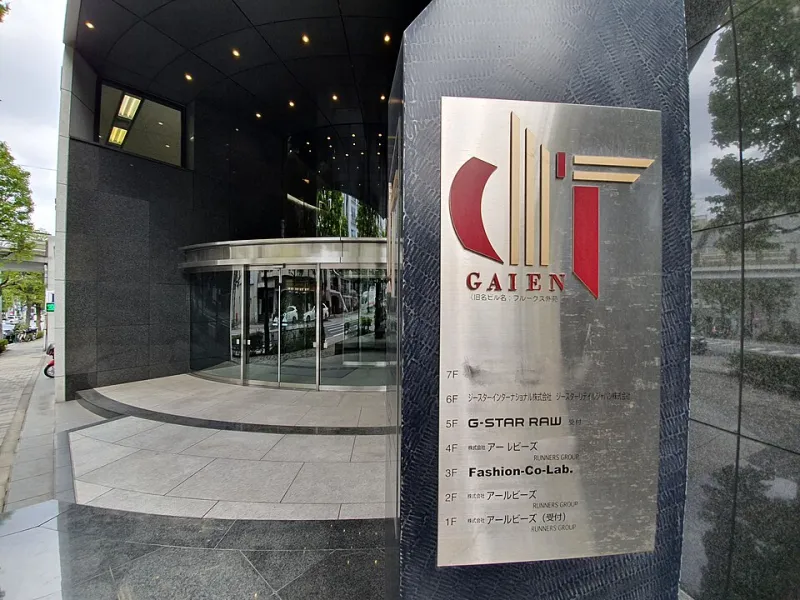
Photo: RobertRown, CC BY-SA 4.0, via Wikimedia Commons
The Email That Ends the Negotiation
It usually arrives weeks after the handshake, when everything else has been agreed: scope, rate, timeline, even the kickoff call scheduled across time zones. Then a note from the client's accounting department surfaces, often forwarded by your champion inside the company with visible embarrassment. The accounts payable system, it explains, cannot process payments to individuals. Could you provide your corporate registration information?
For American freelancers and solo consultants, this is the moment a Japanese market opportunity collides with Japanese administrative reality. The client wants to pay you. The person who hired you wants to pay you. But the machine that writes the checks has no slot for a sole proprietor in Ohio.
Why the Machine Says No
The friction is not hostility toward foreigners, and it is not even primarily about you. It is about how Japanese corporate accounting consumes vendor information.
A kabushiki kaisha or godo kaisha exists as a set of registered facts: a legal name in kanji or kana, a corporate number, a registered address, an identified representative director. When a Japanese AP clerk enters a vendor into the payment system, they are transcribing from the tōkibo tōhon, the corporate registry extract. That document is the vendor's identity. Anything that cannot be transcribed from it tends to be treated as an exception, and exceptions require approvals, and approvals take quarters, not weeks.
An individual contractor offers no such document. A sole proprietor in the United States has an SSN, a DBA filing in some states, maybe an EIN. None of it maps cleanly onto what a Japanese finance system expects. The clerk is not being difficult. The clerk is being unable.
There is also a tax dimension that American freelancers routinely underestimate. Japanese companies have their own withholding and reporting obligations when they pay certain categories of domestic vendors. Paying a foreign individual with no Japanese entity sits in an ambiguous zone that many AP departments would simply rather not navigate. A registered kaisha, by contrast, slots into familiar domestic-vendor workflows with a corporate number and a clean invoice.
The Invoicing Mismatch Nobody Warns You About
Even when a Japanese client agrees to pay an individual, the paperwork rarely cooperates. Japanese business culture runs on the seikyūsho, a formal invoice document with expected fields: the issuer's name as legally registered, the corporate number under Japan's qualified invoice system, the amount with consumption tax treatment clearly indicated.
An American freelancer's invoice, generated from QuickBooks with a US address and a note about being exempt from Japanese consumption tax, looks foreign in every sense. Some clients absorb the awkwardness. Many quietly deprioritize it, and your payment slips from thirty days to ninety to whenever someone remembers.
Incorporation changes this calculus almost instantly. Once you hold a registration certificate, your invoice carries a legal name, a corporate number, and a registered address that a Japanese finance department can process without a single exception approval. The conversation shifts from "can we even pay this person" to routine vendor onboarding.
What Incorporating Actually Solves — and What It Doesn't
To be clear about the boundaries: a godo kaisha will not make you more talented, and it will not fix a bad contract. What it does is remove you from the exception pile.
Consider what the registration gives you in practical terms:
- A legal name that transcribes into Japanese systems, ideally chosen with kanji or kana readability in mind
- A corporate number recognized across Japanese government and banking infrastructure
- A bank account at a Japanese institution, which shortens payment rails from international wire to domestic transfer
- An entity that signs contracts in its own name, keeping your personal signature out of Japanese jurisdiction
What it does not solve is your US tax situation. A foreign-owned single-member LLC equivalent raises its own American filing obligations, and a kaisha owned by a US resident has real consequences on Form 5471 and related disclosures. This is where a competent cross-border CPA stops being optional.
The Math Worth Doing Before You File
Incorporation in Japan is not free. Registration fees, capital, an agent, a corporate bank account, and ongoing filings add up, and a godo kaisha with modest capital can be stood up for a few thousand dollars all-in, with annual maintenance costs on top.
The question is not whether incorporation is expensive. The question is whether one client relationship justifies it. If a Japanese enterprise contract is worth $80,000 a year and the alternative is losing it to a competitor who happens to have a kaisha, the arithmetic answers itself. If you are chasing a single $5,000 project, it probably does not — yet.
The pattern worth watching is repeatability. One Japanese client is an experiment. Two is a market. And a market is exactly what a registered kaisha is built to serve.
The Sequencing Question
Founders often ask whether to incorporate before or after landing the Japanese client. The honest answer is that the AP rejection arrives late in the sales cycle, after trust has been built and terms have been agreed, which is the worst possible moment to start a six-week registration process.
The pragmatic play, if Japan is a serious part of your pipeline, is to register before the objection can be raised. Walking into a Japanese negotiation already holding a tōkibo tōhon does more than unblock payments. It signals that you understood, before anyone had to explain it, how business gets done here. In a market that prizes preparation, that may be the cheapest credibility you ever buy.