Six Hundred Yen Buys Your Whole Corporate Story: What the Tōkibo Tōhon Tells Strangers About Your Kaisha
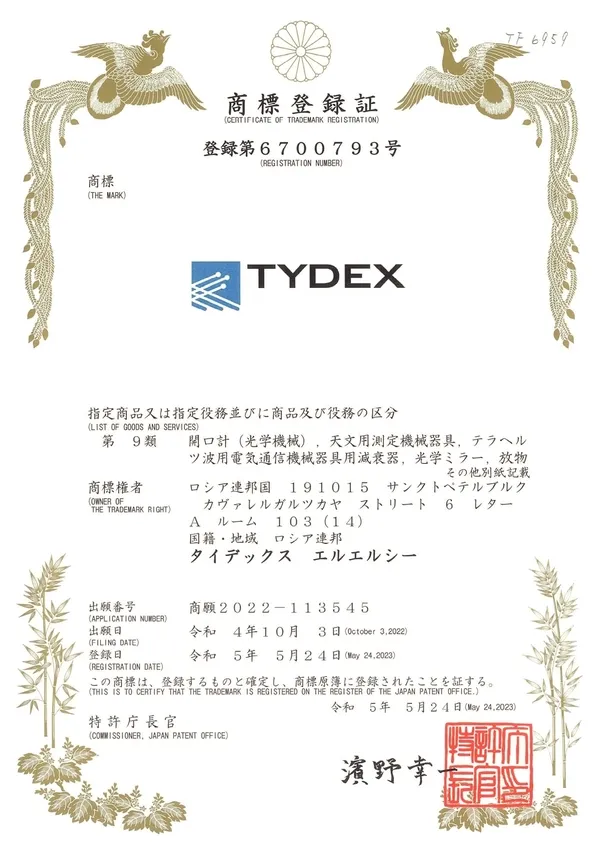
Photo: Japanese corporate registry certificate document desk, via www.tydexoptics.com
In the United States, corporate records are scattered across fifty state databases, many of them clunky, some of them paywalled behind registered-agent portals. In Japan, it is radically simpler. Walk into any Legal Affairs Bureau — or open the registry website from your laptop — pay six hundred yen, and you can download the complete certificate of registered matters, the tōkibo tōhon, for any incorporated company in the country. Your competitors can. Your landlord already has. The bank you're about to pitch certainly will.
Most US founders treat this document as a formality they filed once and forgot. That's a mistake worth correcting, because the tōkibo tōhon is not just a record of your company — it is the single most scrutinized piece of paper your kaisha will ever produce.
What's Actually on the Document
The registry certificate reads like a terse dossier. In order, it lists:
- The company name and registered headquarters address
- Date of incorporation
- The stated business purposes (usually a numbered list, often ten to twenty items long)
- Registered capital
- Names and addresses of the representative director(s) — and, for a kabushiki kaisha, other directors and statutory officers
- Any restrictions on the representative's authority, if you've filed them
- History of changes: amendments, capital increases, director appointments and resignations, each with a date
That last bullet is the part nobody warns you about. The tōkibo tōhon is cumulative. Every amendment you've ever filed stays on the certificate, in chronological order, forever. A careful reader can reconstruct your company's entire corporate biography — the director who joined and quietly left, the address change eighteen months in, the capital increase that followed a round of funding.
The Landlord Reads It First
Before a Tokyo commercial landlord hands over keys to a foreign tenant, their property agent will typically request your tōkibo tōhon alongside your financials. What are they looking for? Three things, mostly.
First, the registered address. If your headquarters is a virtual office in a shared suite in Shinjuku — the same suite hosting two hundred other kaisha — a landlord reads that as a company without substance. It's not disqualifying, but it invites harder questions about whether you can service a multi-year lease.
Second, the incorporation date paired with the capital figure. A company incorporated eight months ago with ¥1,000,000 in registered capital applying for a ¥500,000/month lease is a predictable decline. The registry tells that story before you open your mouth.
Third, the representative director's name matching the signatory. If the person signing the lease application isn't the representative on the registry, the application stalls until you explain the gap in writing.
The Bank Reads It Harder
Japanese banks are famously deliberate about opening corporate accounts, and the tōkibo tōhon is the spine of their review. Mismatches between the registry and your application materials are the single most common cause of delay. A representative name rendered differently on your application than on the certificate. A business purpose list that doesn't obviously cover the transactions you say you'll conduct. An address where mail to the registered HQ goes to a mail-forwarding service the bank can't verify.
None of these are fatal. All of them cost you weeks.
The practical takeaway: before you open a corporate account, pull your own tōkibo tōhon and audit it against every document in your application packet. Name spelling, address formatting, business purpose coverage — treat the registry as the source of truth and make everything else agree with it.
What Sloppy Entries Cost You in Sales
Here's the scenario US founders underestimate most. You're negotiating with a mid-sized Japanese supplier. Their sales team, as routine practice, pulls your tōkibo tōhon before quoting terms. What they find:
- A business purpose list copied wholesale from a template, containing activities you'll never perform (and missing, or burying, the one you actually do)
- A registered address shared with dozens of unrelated companies
- A director roster that changed twice in the first year with no obvious pattern
None of this is a legal problem. All of it is a credibility problem. Japanese counterparties read registry hygiene as a proxy for operational discipline — the same way a US enterprise buyer might judge you by the polish of your website or the cleanliness of your Delaware filings. A tōkibo tōhon that looks assembled in a hurry reads like a company that operates in a hurry.
Using It Offensively: Due Diligence in Reverse
The registry works in your favor, too. Before signing a distribution agreement, extending net-60 payment terms, or wiring a deposit to a Japanese vendor, pay the six hundred yen and pull their certificate. You'll learn:
- Whether the company is as old as it claims
- Whether registered capital matches the scale of the commitment you're making
- Who actually holds signing authority — the person you've been emailing may not be the representative director at all
- Whether the company has recently undergone distress signals: sudden director exodus, an address change to a small residential lot, repeated capital reductions
Five minutes of reading can prevent a five-figure dispute.
Fixing What's Already on File
If you're reading this and wincing, the good news is that registry entries are amendable. Vague business purposes can be sharpened through a shareholders' resolution and a change registration. A shared-office address can be replaced once you have a lease that permits registered use. A representative change is a straightforward filing with the right forms and seal.
What you can't do is scrub history. Amendments layer on top of prior entries, so the record of what was once on file remains visible. That's all the more reason to get the original registration right the first time — or to correct course sooner rather than later, so the story the certificate tells is one of deliberate evolution rather than serial correction.
The Six-Hundred-Yen Audit
Here's the exercise we recommend to every founder we work with, ideally once a year: download your own tōkibo tōhon, hand it to a colleague who doesn't know your company, and ask what they'd conclude about you as a counterparty. Then read it the way the bank will, the way the landlord will, and the way your next big Japanese customer will.
In Japan, your corporate registry isn't buried in a filing cabinet. It's a public document, one credit-card-sized fee away from every person who matters to your business. Make sure it's telling the story you want told.