Half the Shares, Twice the Paperwork: Putting a Spouse on the Cap Table of a Japanese Kaisha

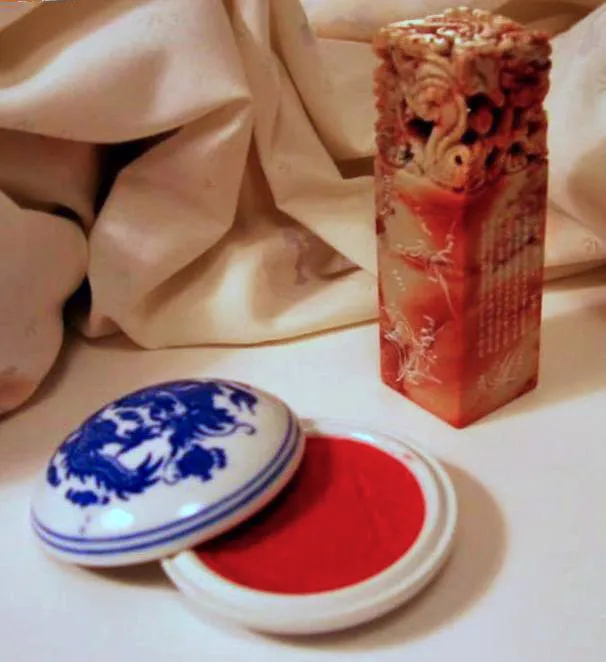
Photo: Nicolas Lannuzel from Singapore, Singapore, CC BY-SA 2.0, via Wikimedia Commons
Plenty of American founders arrive in Japan with a partner at home and a plan on paper: the kaisha will be jointly owned, fifty-fifty, the way a family business back in Ohio or Oregon might be structured. It is a reasonable instinct. It is also one of the most quietly complicated decisions you can make during incorporation, because the moment your spouse appears on the cap table, two tax systems — neither of which talks to the other — both develop opinions.
The Gap Between Two Rulebooks
Start with the American side. Under Internal Revenue Code Section 1041, transfers of property between spouses incident to divorce, or between spouses where both are US persons, are generally treated as gifts with no gain or loss — and thanks to the unlimited marital deduction, usually no gift tax either. That exemption is so routine that most US couples never think twice about titling assets jointly.
The trouble is that the unlimited marital deduction has a residency requirement. If your spouse is not a US citizen — and many American founders in Japan are married to Japanese nationals or third-country partners — the deduction shrinks to an annual exclusion (around $185,000 in 2024, indexed annually) for gifts to a non-citizen spouse. Anything above that can burn through your lifetime exemption or trigger a filing obligation.
Now cross the Pacific. Japan taxes gifts based on the recipient's residence. If your spouse is a non-resident of Japan for gift tax purposes, a transfer of kaisha shares from you to them may fall outside Japan's gift tax net entirely — but if they are a resident, Japan will value the shares and levy its own gift tax, with rates that climb steeply. There is no Japanese equivalent of a spousal exemption for gifts of this size. You are operating in a gap where each country assumes the other one handles it.
At Incorporation or After: The Math Is Not the Same
The cleanest route is almost always to allocate shares at the moment of incorporation rather than transfer them later. When you file your registration for a godo kaisha or kabushiki kaisha, you declare the capital contribution and the ownership percentages in the same breath. If your spouse genuinely funds their portion — a bank transfer from their account, documented, traceable — then no gift has occurred. Each spouse simply owns what they paid for.
The transfer route is messier. If you incorporate with 100% ownership and later sign shares over to your spouse, you have created a taxable event to analyze in at least one country, possibly both. Japan will want to know the fair market value of the equity on the transfer date. The IRS, if you are a US person gifting to a non-citizen spouse, will compare the value against the annual exclusion. And if the shares have appreciated since incorporation — say, the kaisha landed a major client in the interim — the gift is measured at the appreciated value, not what you paid.
There is also a practical wrinkle specific to kabushiki kaisha: share transfers must be recorded, and for a KK with share certificates or transfer restrictions in the articles, your spouse's entry onto the register of shareholders is a formal corporate act, not a handshake.
What the IRS Sees When You Own a Kaisha
American founders often assume that a Japanese company is invisible to the IRS until dividends flow home. Not so. If you and your spouse each hold 50% of a kaisha, the company is almost certainly a controlled foreign corporation (CFC) from the US perspective — two US-related shareholders owning more than 50% between them will do it.
The consequences arrive on a schedule. Form 5471 becomes an annual fixture, with categories of filing depending on your stake. If the kaisha earns passive income or holds passive assets, Form 926 and PFIC analysis may enter the picture. And if the kaisha makes loans or transfers of money to you — a founder draw structured as a loan is a common mistake — Form 3520 may be required, with penalties that start at the greater of $10,000 or 35% of the transaction. None of this is fatal; all of it is easy to miss.
A spousal co-ownership arrangement can actually complicate this. If only one spouse is a US person, the CFC analysis and filing burden may fall on that person alone. Coordinate with a cross-border accountant before you finalize percentages, not after.
When a Salary Beats a Stake
Here is the option almost nobody considers first: do not put your spouse on the cap table at all. If the goal is household income, fair recognition of their labor, or Japanese visa positioning, a director's compensation or salary arrangement accomplishes most of it without triggering gift tax analysis in either country.
A spouse employed by the kaisha earns income that is taxed as employment — ordinary, predictable, and reportable in the country where the work is performed. For a non-resident spouse of a US founder, this avoids the Section 1041 residency trap entirely. For a Japan-resident spouse, salary flows through Japan's ordinary income brackets rather than Japan's punitive gift tax schedule. And if your spouse's employment status supports a dependent visa or a business manager application down the road, documented payroll does more work than a silent equity stake.
The equity route still makes sense when your spouse is a genuine co-founder — contributing capital, signing leases, sharing liability and decision-making. In that case, allocate at incorporation, document the funding trail, and model the CFC filings before you file the registration.
The Order of Operations That Saves You Money
- Decide ownership before drafting the sekiin seimei or articles of incorporation. Retroactive changes are where the tax surprises live.
- Fund contributions from separate accounts. If your spouse owns 40%, the money should visibly come from them.
- Run the US filing matrix with a cross-border CPA. Form 5471 at minimum; Form 3520 if the kaisha will ever move money to you personally.
- Check your spouse's residence status for gift tax purposes in both countries before any post-incorporation transfer is even discussed.
- Price the salary alternative. Sometimes the boring option is the cheap one.
A kaisha is a flexible instrument. But flexibility on paper becomes rigidity at the tax office. Decide who owns what before the stamp dries — not after.