Substance Over Stationery: Inside the Interview That Precedes a Kaisha's First Deposit
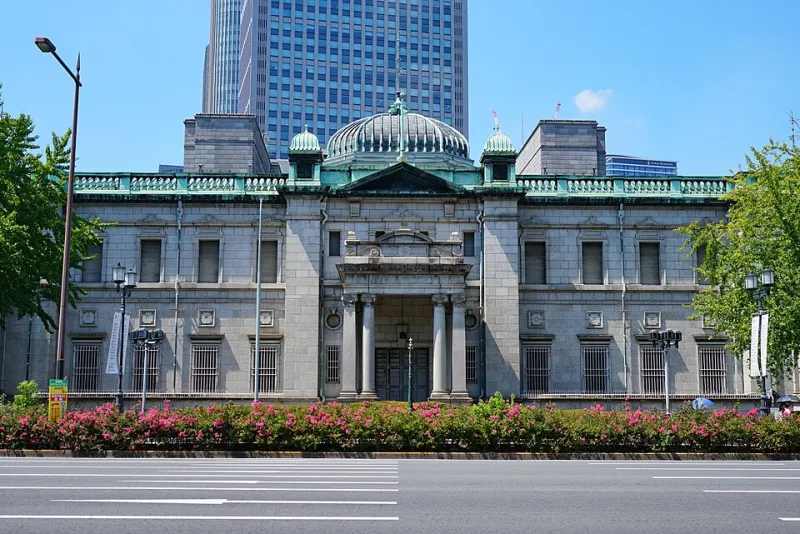
Photo: 掬茶, CC BY-SA 4.0, via Wikimedia Commons
The certificate of all historical matters is three days old. The company seal is registered. The articles of incorporation are in the folder. And at the first branch visit, the officer behind the counter asks, politely, where the office is and who answers the telephone. For many US founders, this is the moment it becomes clear that registering a kaisha and banking a kaisha are governed by entirely different tests.
A registration is a filing. An account is a relationship.
Incorporation is an act of registration; the Legal Affairs Bureau confirms that documents conform to the Companies Act. Opening an account is a decision by a private institution about reputational and credit risk, made under the Act on Prevention of Transfer of Criminal Proceeds. The bank must identify the company, its representative, and its beneficial owners — those holding more than a quarter of voting rights, directly or indirectly — and must obtain a written attestation that the applicant has no ties to organized crime groups. A newly formed company with a foreign parent and a foreign-resident director presents, from the bank's perspective, an unusually large number of unknowns.
The document stack, in practice
Expect to be asked for most of the following:
- Certificate of all historical matters and the articles of incorporation, both recent.
- Company seal registration certificate, plus the registered company seal itself.
- Personal seal registration certificate and identification for the representative director — residence card, My Number card, or, for a non-resident, passport with supporting verification.
- A board or shareholder resolution authorizing the account and naming the signatories.
- The bank's own registration seal card, which need not be the registered company seal.
- Evidence of business substance: lease, utility statement, contracts with customers or suppliers, a Japanese-language business plan, a website with a Japanese address, and the engagement letter from your zeirishi.
The last group is where applications succeed or fail. The first five are stationery. The sixth is the argument.
The representative director question
Most major banks prefer, and many effectively require, a representative director resident in Japan. A founder living in Ohio will meet refusals at the megabanks more often than not, and the refusal will usually be conveyed without a stated reason.
The workable responses are limited and each carries consequences. Appointing a Japan-resident director is the most durable, provided the scope of that director's authority is drafted deliberately — an earlier article on this site set out what a representative director can sign alone, and the same powers that satisfy a bank can unsettle a founder. Online banks and regional shinkin institutions sometimes apply different thresholds and are worth approaching sequentially rather than simultaneously. Japan Post Bank has historically been more accessible to newly formed companies, with corresponding limits on functionality.
What the interview is really testing
Branch staff in Japan are not evaluating your presentation. They are testing two things: whether the company exists in a physical and operational sense, and whether its money movements will be predictable.
Expect questions along these lines. What does the company sell, and to whom? Where do customers pay from, and in what currency? What monthly inflow and outflow do you anticipate, and across how many transfers? Will there be cash handling, and if so, who deposits it? Who keeps the books? Will the founder be in Japan, and how often? Who ultimately owns the company? Are there related parties abroad that will send or receive funds?
Answers that describe a plausible, bounded pattern are stronger than answers that describe ambition. A founder who says monthly revenue of roughly 4,000,000 yen from four named Japanese clients, collected by bank transfer, is easier to approve than one who projects growth without counterparties.
How long, and what to do meanwhile
Two weeks is fast. Two to three months is normal. A refusal typically arrives without explanation, and reapplication at the same branch within six months is usually futile; a different institution or a different branch of the same institution sometimes behaves differently.
While the application sits in review, three rules matter.
Do not run company money through a personal account. It breaches the account terms, muddles the tax position, and is difficult to unwind cleanly at year end.
Do not assume a payment processor solves it. A Japanese acquiring arrangement generally settles to a Japanese bank account, so revenue collection can be gated by the same delay.
Do not treat a foreign-currency wallet as a substitute for a corporate account. Services offering virtual yen receiving details are useful for marketplace settlements and cross-border receipts, but their terms change and they do not satisfy a Japanese counterparty's request for a domestic transfer destination.
The founder who plans for a ninety-day banking gap, who opens the lease in the company's name before applying, who has a Japanese phone number that a human answers, and who brings a Japanese-speaking officer to the interview is not gaming the process. They are answering the only question the branch is actually asking: is there a company here, or only a certificate?