The Company You Buy Inherits Its History: Due Diligence Traps in Japanese Acquisitions
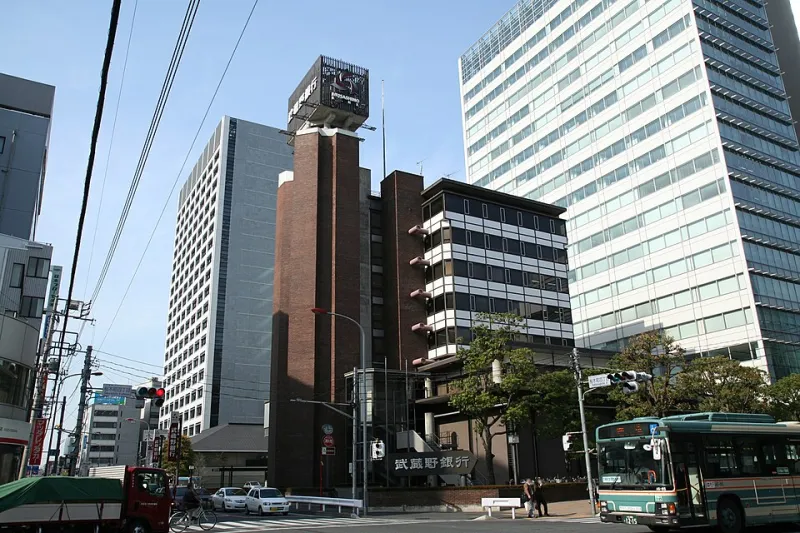
Photo: User:PRiMENON, CC BY-SA 3.0, via Wikimedia Commons
Most American founders entering Japan choose between two doors. Through the first, they incorporate: a new kabushiki kaisha or godo kaisha, a blank registry file, a first fiscal year, no history. Through the second, they buy an existing Japanese entity — often because it already holds a license, a lease, a customer list, or simply a registration date that looks mature on a proposal.
The two doors lead to very different rooms. Incorporation is a drafting exercise. Acquisition is an inheritance, and in Japan the inheritance includes documents, obligations, and habits of administration that the seller may not fully know and may not want to explain.
What a share transfer actually transfers
A transfer of shares (kabushiki no jōto, or for a godo kaisha, equity interest transfer) moves ownership of the entity itself. Everything inside stays where it is: contracts, employees, tax liabilities, bank relationships, licenses, litigation, and the corporate seal registration. Nothing is carved out by default.
An asset transfer (jigyō jōto) is the alternative, and US buyers often prefer it precisely because it leaves history behind. But in Japan, the assets that matter most frequently do not travel cleanly. Leases require landlord consent. Licenses are granted to a named entity and lapse on transfer. Customer relationships tied to a registered vendor number must be re-established. The clean deal may be the slower one.
The cheapest listing is usually a warning
Japan has a long tradition of dormant or near-dormant companies offered for sale — entities kept alive on paper for years, filing minimal returns. They are inexpensive because they contain nothing. What they may contain instead is a decade of unresolved obligations: delinquent resident tax on a former representative, unpaid social insurance, a head office address that no longer exists, a seal registration nobody can produce.
A company with no operations is not a company with no liabilities. It is a company whose liabilities were never triggered.
Four areas where Japanese diligence differs
Retirement obligations. A retirement allowance system (taishokukin) may be written into the work rules even if no one has ever calculated the liability. For a company with long-serving employees, this can be the largest single number in the deal and it appears nowhere in the sales memorandum.
Unpaid wages and hours. Japanese wage claims can reach back years, and recordkeeping at small companies is often informal. Ask for time cards, payroll ledgers, the 36 agreement covering overtime, and social insurance enrollment records. Compare the enrolled headcount with the payroll headcount. The gap is a liability.
The corporate seal. The company's registered seal (jitsuin) is filed with the Legal Affairs Bureau, and a certificate of seal registration is issued against it. Verify that the seal in the seller's possession matches the registration, that the bank's signature card reflects current officers, and that no powers of attorney were granted to people who are no longer involved. A seal that cannot be accounted for is a control failure, not a paperwork nuisance.
Filings that disagree with the story. Request the corporate registry extract, the last several corporate tax returns, consumption tax filings, tax payment certificates, and social insurance payment records. Then compare them with the pitch. Revenue figures that differ between a tax return and a sales deck are the single most common reason Japanese deals stall.
Leases, licenses, and the consent problem
A Japanese commercial lease is typically written for a specific tenant and rarely assignable without the landlord's written approval. The approval may come with conditions: a new guarantor, an increased deposit, a shortened term, or a personal guarantee from the buyer. Ask before signing the purchase agreement, not after.
Licenses follow the same logic. A travel agency registration, a construction permit, a restaurant license, a staffing agency notification, or a secondhand goods dealer permit is tied to the entity, its officers, and its premises. Even in a share transfer, where the entity survives, a change of representative director can trigger notification duties and, in some regimes, re-examination.
The cross-border mechanics buyers overlook
Purchase agreements in Japan are commonly bilingual, and the two versions occasionally disagree on governing law and dispute forum. Decide deliberately which text controls. Confirm the seller's tax residency and the Japanese tax consequences of the sale for the seller, because an unhappy seller is an unhelpful counterparty during post-closing integration.
Transfer restrictions matter too. Many kabushiki kaisha articles require board approval for share transfers. A godo kaisha typically requires the consent of all members under its articles. Confirm that the approvals were obtained in the form the articles require, and keep the minutes.
Where to walk away
- The registered head office does not correspond to any operating premises the seller can show.
- Payroll headcount exceeds social insurance enrollment without an explanation.
- The seller cannot produce the corporate seal or the seal registration certificate promptly.
- Tax returns have not been filed for any year in the last three.
- The landlord has not been informed of the proposed change in ownership.
- Receivables are concentrated in one customer whose contract is unwritten and terminable on short notice.
None of these is automatically fatal. But each converts a purchase price into an opening position for renegotiation, and a buyer who has not priced them in is paying for the seller's past rather than the company's future.